
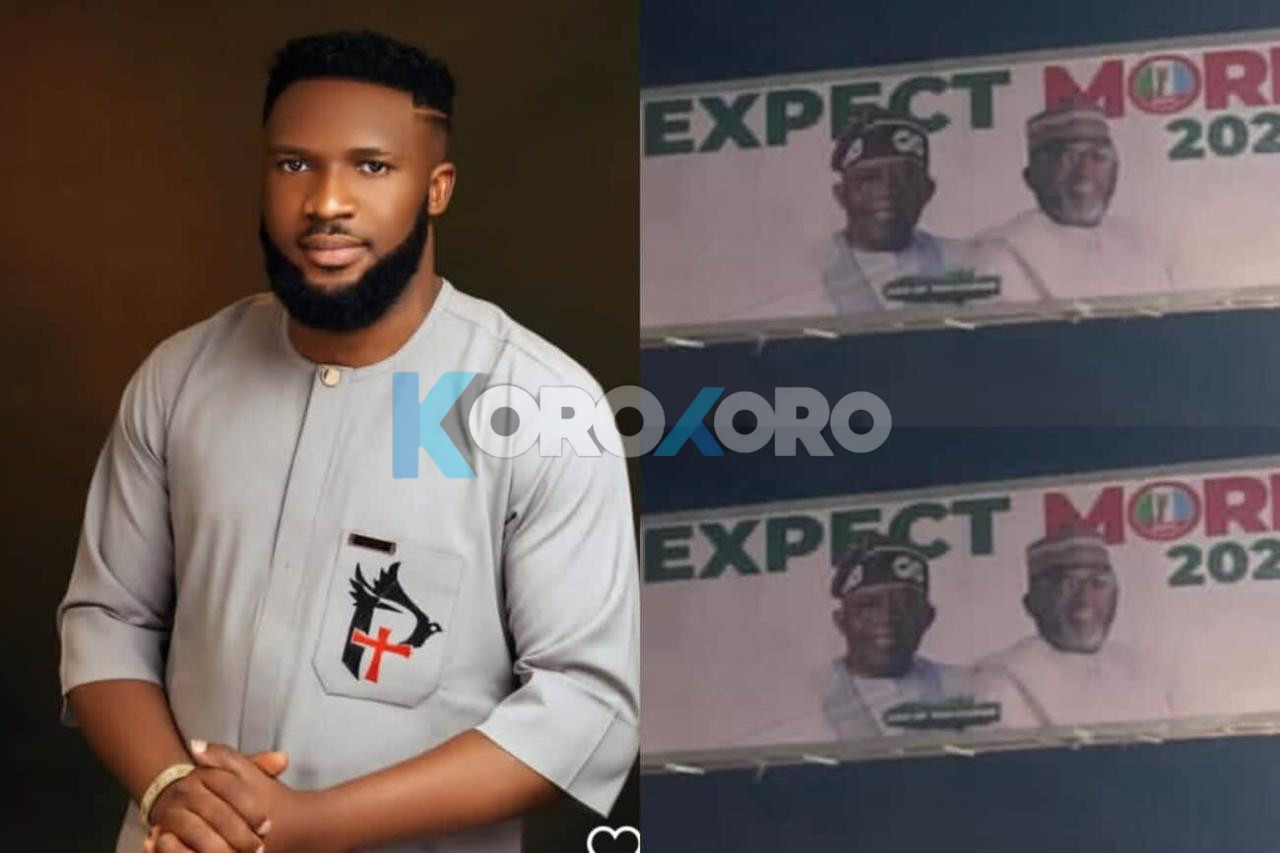
Nigerian gospel singer Ebuka Songs has ignited a fresh wave of reactions online after openly criticizing President Bola Ahmed Tinubu over his widely circulated “Expect More” campaign billboards.
The billboards, which have appeared across different parts of the country, were designed to reassure Nigerians that better days lie ahead. But for Ebuka Songs, that message didn’t sit well—not even close.
“We Don’t Want Anything Again”

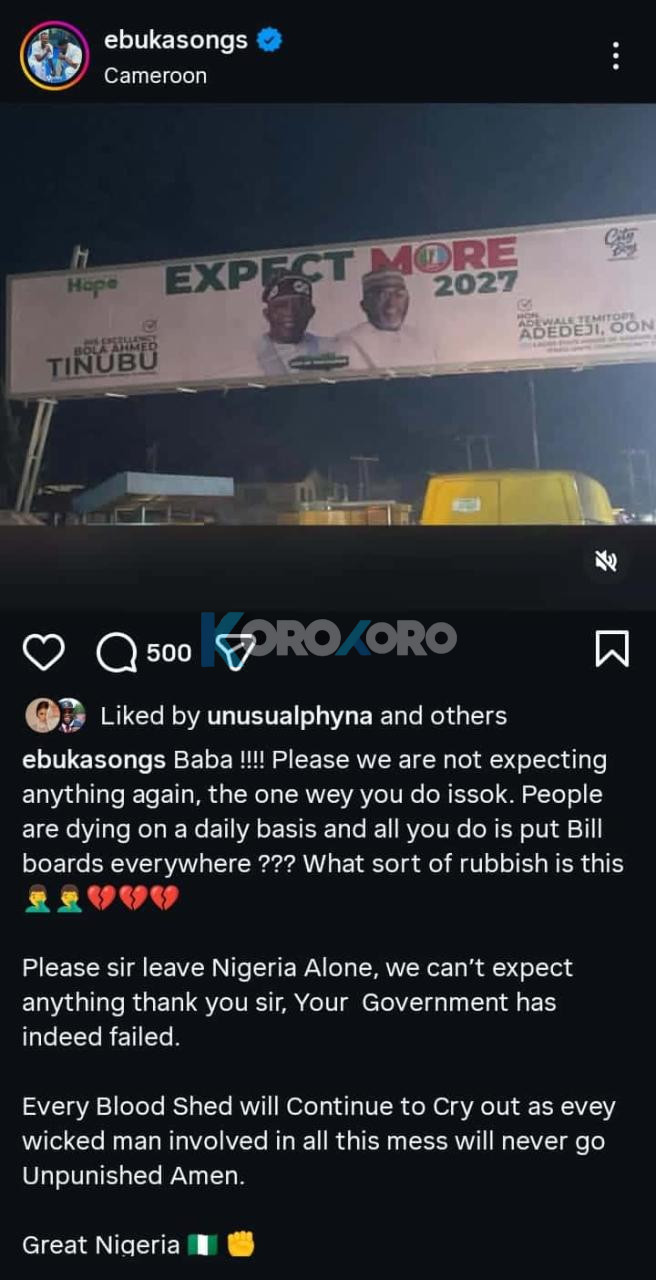
In a fiery post, the singer didn’t hold back, declaring that Nigerians are no longer expecting anything from the current administration.
According to him, the situation on the ground tells a completely different story—one marked by hardship, insecurity, and daily loss of lives.
He questioned the government’s priorities, criticizing the decision to flood the streets with billboards while many citizens continue to struggle.
Anger, Frustration, and Strong Words
Clearly emotional, Ebuka described the situation as unacceptable, urging the president to “leave Nigerians alone” and accusing the government of failing the people.
He went further to warn that every act of injustice and bloodshed would not go unanswered, adding a spiritual tone to his message that resonated with many of his followers.
Mixed Reactions Across the Country
His outburst has since triggered intense debate online, with some Nigerians backing his courage to speak out, while others believe his approach was too harsh.
The controversy has once again highlighted the growing tension between public figures and political leadership, especially at a time when many citizens are demanding real change over promises.
More Voices Joining In
Ebuka’s reaction is not an isolated one. Several celebrities and public figures have recently voiced concerns over the state of the nation, reflecting a broader frustration among Nigerians both at home and abroad.
A Message That Won’t Be Ignored?
Whether seen as bold truth or outright criticism, one thing is clear—this is more than just a social media rant.
It’s a reflection of what many Nigerians are feeling but may not always say out loud.
And now, the big question remains:
Are Nigerians still willing to “expect more”… or have they already seen enough?
Be the first to comment