
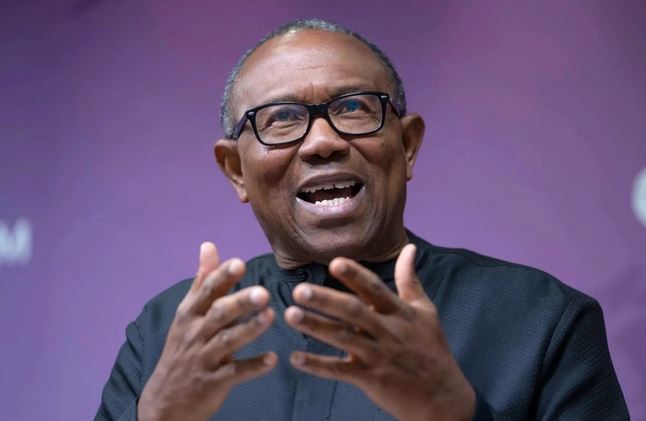
Former Anambra State Governor and Labour Party presidential candidate in the 2023 election, Peter Obi, has lamented Nigeria’s worsening poverty, hunger, and insecurity, describing the situation as unacceptable for a country with vast human and natural resources.
Obi made the remarks on Saturday in Asaba, Delta State, during the official declaration and integration of the Delta State Obidient Movement into the African Democratic Congress (ADC). The event formed part of ongoing political realignments ahead of the 2027 general elections.
Speaking at the gathering, Obi said Nigeria has become one of the hungriest and most insecure nations in the world, with an estimated 150 million Nigerians currently living below the poverty line.
“Our country today has more people living in poverty than China and India combined. These two countries are nearly three billion people, and we are about 250 million, yet we have more people living in poverty than the two of them put together,” he said.
He also criticised the Federal Government’s handling of the economy, alleging that Nigeria has accumulated more loans since the removal of fuel subsidy than previous administrations combined.
Obi stressed that Nigeria’s challenges affect everyone, regardless of ethnicity or religion, calling for unity and collective action.
“This is not the time to talk about tribe — no tribe buys bread cheaper. It is not a time for religion — no religion buys bread cheaper. Everybody is suffering,” he said.
According to Obi, Nigeria’s problems are rooted in poor leadership rather than lack of resources, expressing optimism that a change in governance could reverse the country’s decline.
“This country is not poor; it is being badly led,” he stated, adding that the ADC is committed to offering practical solutions to Nigeria’s problems.
“We want to do the right thing for the country. The country has suffered enough.”
Also speaking at the event, Senator Andrew Uchendu, Deputy National Chairman of the ADC (South-South), said Nigeria has failed across virtually all sectors and requires urgent reforms and responsible leadership to address its socio-economic and security challenges.


Be the first to comment